
Underfloor heating
Underfloor heating – even warmth, low running costs
Even, gentle warmth radiating from the floor. The perfect partner for a heat pump and maximum savings.
From
690 CZK/m²
What we offer
Complete services
all in one place
How it works
How does underfloor heating work?
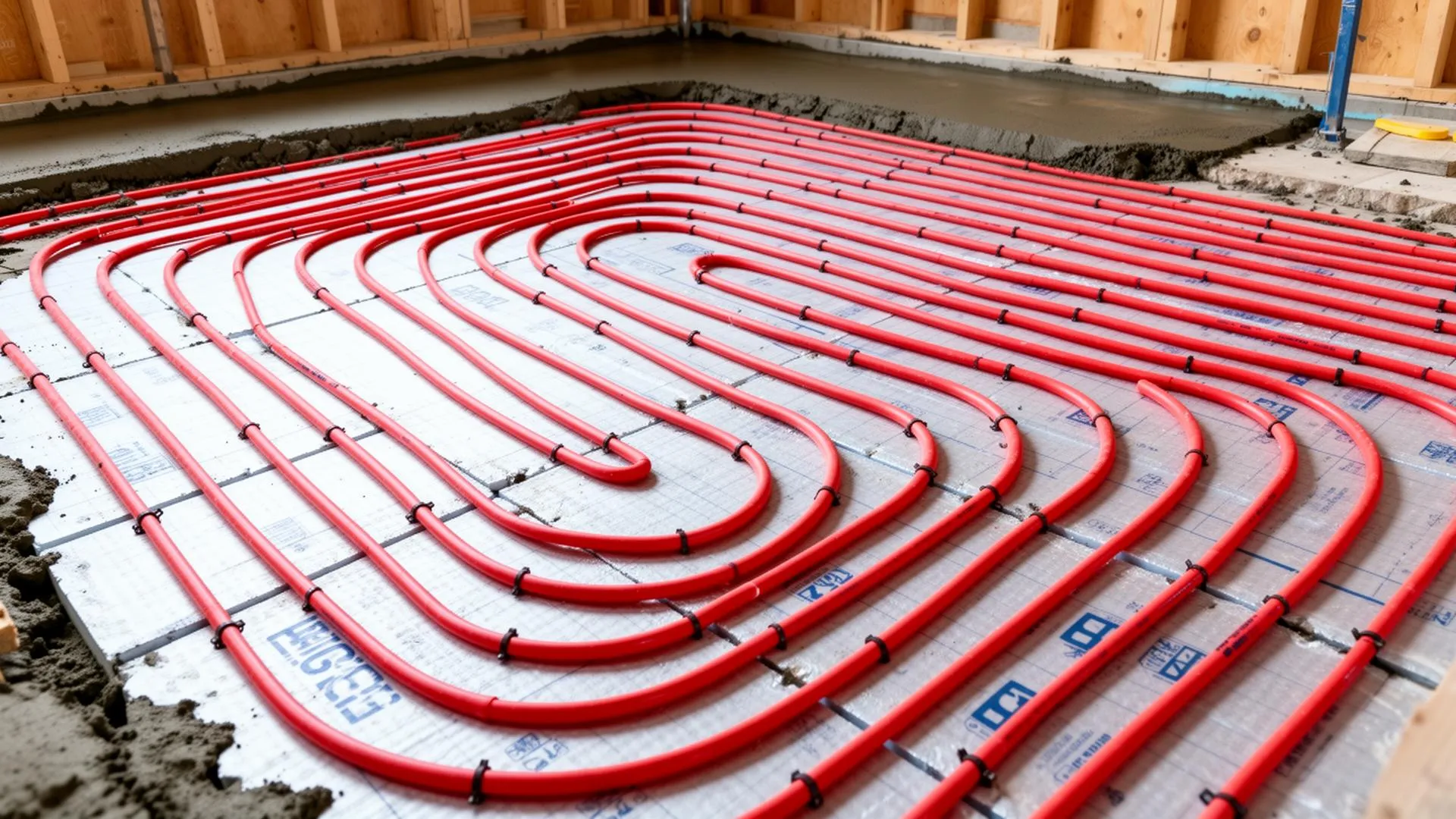
Underfloor heating is the most modern way to heat a space. Pipes embedded in the floor carry warm water at low temperatures (typically 30–40 °C). The whole floor becomes a large radiating surface that warms the room evenly.
Unlike radiators, which heat the air by convection and create temperature gradients, underfloor heating radiates warmth evenly from the floor upwards. The temperature is pleasant at foot level and gradually decreases towards the ceiling – exactly the way the human body finds most comfortable.
Thanks to its low operating temperature, underfloor heating is the ideal partner for a heat pump. The pump operates at higher efficiency precisely when supplying low-temperature water.
Why it pays off
Why choose underfloor heating?
- ✓Even heating across the entire room with no cold spots
- ✓Pleasant warmth from the soles of your feet – ideal for children playing on the floor
- ✓Saves space – no radiators, more freedom in the interior
- ✓Maintenance-free operation throughout its lifespan
- ✓Suitable underneath all common floor coverings
- ✓Higher perceived comfort – you can heat at lower temperatures
System types
We specialise in several types of underfloor heating
With a system board
The most common solution for new builds. An insulation board with raised studs makes pipe routing easy and provides thermal insulation from the substrate.
With guide rails
An alternative to system boards. The pipe is held in place by guide rails fixed to the insulation. Suitable for regular layouts.
Dry construction
A wet-free system – pipes are placed into pre-formed boards. Ideal for refurbishments and timber-frame buildings.
SPIDER system
Very low build-up height – from 30 mm. Perfect where a conventional floor build-up isn’t possible.
Pipes secured with clips
An economical option – the pipe is clipped to the insulation board. Quick and cost-effective installation.
PEX/AL/PEX pipework
Multi-layer pipe with an aluminium core ensures low expansion and an oxygen barrier.
How we work
How is underfloor heating installed?
Survey and design
We measure the premises, calculate heat losses and design the optimum loop layout. We take the floor finish and heat source into account.
Substrate preparation
We lay the insulation and the system board. We prepare the manifold and the connection to the heat source.
Pipe installation
Pipes are laid at precise spacings according to the design. Once finished we pressure-test the entire system.
Screed and controls
After a successful pressure test the system is covered with anhydrite or concrete screed. We then install thermostats and room-by-room controls.
Maintenance & service
Is underfloor heating maintenance-free?
Underfloor heating is essentially maintenance-free. Pipes laid in the floor have a service life of over 50 years and require no regular maintenance. All we recommend is the occasional pressure check and bleeding of the system.
If the system is connected to a heat pump, regular servicing of the pump itself is needed. We recommend checking the manifold and control valves once a year – ideally before the heating season starts.
Case studies
Selected projects
Family home, Hodonín
Underfloor heating throughout the house combined with an air-to-water heat pump.
FAQ
Frequently asked questions
Enquiry
Interested? Get in touch
Free site survey · We reply within 24 hours